



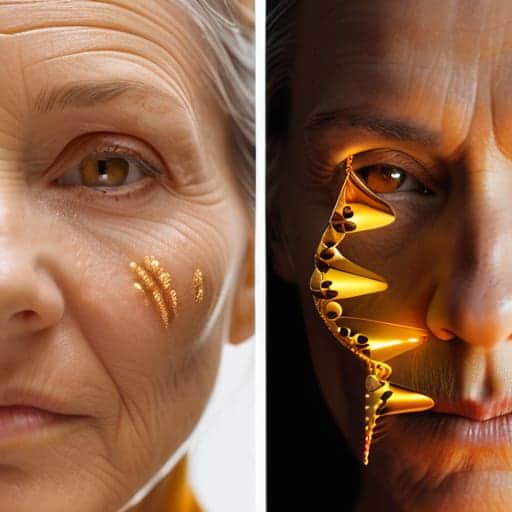
I was sitting in a dimly lit dim sum parlor in Richmond last week, watching my grandmother deftly navigate a steamer basket with more agility than I possessed at twenty-five, when it hit me: the numbers on our driver’s licenses are a total lie. We’ve been sold this massive, expensive myth that aging is a fixed, linear descent dictated solely by the passing years. But as I watched her, I realized that the tension between biological age vs chronological age isn’t just some abstract medical concept—it’s the difference between feeling like a vibrant participant in your own life or feeling like a passenger in a fading body.
I’m not here to peddle you some overpriced “longevity elixir” or a complicated biohacking regimen that requires a lab coat to understand. Instead, I want to pull back the curtain on what actually matters. I’m going to share a no-nonsense guide to understanding how our lifestyle choices and local rhythms actually shape our cellular reality. We’re going to strip away the clinical jargon and focus on the real-world shifts you can make to ensure your internal clock isn’t just racing to keep up with the calendar.
Table of Contents
- Decoding the Secret Language of Biomarkers of Aging
- The Silent Stories Told by Dna Methylation Testing
- Small Shifts, Big Impact: My Field Notes on Reclaiming Your Biological Clock
- The Heart of the Matter: What We’ve Uncovered So Far
- The Pulse Beneath the Surface
- Beyond the Numbers: Taking the Reins of Your Own Story
- Frequently Asked Questions
Decoding the Secret Language of Biomarkers of Aging
So, how do we actually translate these abstract concepts into something we can measure? It feels a bit like trying to read the subtle shifts in a neighborhood’s character; you can’t just look at a map to see how it’s changing, you have to look at the small, telling details. In the scientific world, these details are known as biomarkers of aging. They act as the tiny, microscopic signals—the “street signs” of our internal landscape—that tell us whether our systems are running smoothly or starting to fray at the edges.
Lately, I’ve been fascinated by how much of this is being unraveled through DNA methylation testing. Think of it as a high-tech way of reading the “epigenetic” notes written on your genetic code, showing how much wear and tear has actually occurred. We’re also seeing incredible breakthroughs in identifying cellular senescence markers, which essentially track those stubborn “zombie cells” that linger and cause inflammation. It’s not just about the numbers on a lab report; it’s about understanding the profound lifestyle impact on aging and learning how our daily rhythms can truly influence our long-term vitality.
The Silent Stories Told by Dna Methylation Testing

If my camera lens can capture the subtle patina on a vintage storefront in the Mission, then DNA methylation testing is essentially the high-resolution macro lens for our biology. While a standard blood test might tell you if you’re “healthy,” looking at your epigenetic markers reveals the actual story written in your cells. Think of it as the difference between looking at a map of a city and actually walking its streets; one shows you the layout, but the other reveals the lived-in character, the wear and tear, and the hidden vitality of the neighborhoods.
Navigating these complex biological readings can feel a bit like trying to decipher a menu in a language you haven’t quite mastered yet—overwhelming at first, but incredibly rewarding once it clicks. While I spend much of my time obsessing over cellular data, I’ve realized that true longevity isn’t just about the numbers on a lab report; it’s about how we embrace the lived experience of our current age. Sometimes, finding balance means stepping away from the clinical charts and reconnecting with the spontaneous, uninhibited parts of ourselves, much like how exploring casual sex uk can be a way to prioritize immediate human connection and joy over the rigid structures of our daily routines.
What fascinates me most is how these chemical tags on our DNA act as a biological diary, recording every late-night espresso run and every sunrise yoga session. By studying these patterns, we can see the profound lifestyle impact on aging in real-time. It’s not just about a number on a page; it’s about understanding how our daily choices—the food we savor and the stress we manage—are literally sculpting our internal landscape. It turns out, our genes aren’t just a fixed blueprint; they are a living, breathing conversation between our environment and our essence.
Small Shifts, Big Impact: My Field Notes on Reclaiming Your Biological Clock
- Listen to your body’s “micro-climates” rather than the calendar; instead of chasing a number, pay attention to how your energy fluctuates after a heavy meal or a late night, as these are the real-time signals of your cellular health.
- Treat your plate like a local farmers’ market discovery—focusing on nutrient-dense, whole foods isn’t just a trend, it’s the most direct way to feed the epigenetic processes that dictate whether your cells age gracefully or rush toward burnout.
- Prioritize “restorative stillness” over mere sleep; I’ve found that true biological rejuvenation happens when we move beyond just hitting the pillow and actually embrace deep, restorative sleep cycles that allow our internal systems to perform their nightly repairs.
- Find your movement rhythm in the wild, not just the gym; whether it’s a brisk walk through a sun-drenched park or a spontaneous dance in your kitchen, consistent, joyful movement acts as a powerful buffer against the oxidative stress that accelerates biological aging.
- Curate your social tapestry with intention, because the quality of your connections acts as a biological stabilizer—surrounding yourself with a supportive, vibrant community can actually lower the systemic inflammation that keeps our bodies feeling older than they truly are.
The Heart of the Matter: What We’ve Uncovered So Far
Your birth certificate only tells half the story; while your chronological age is a fixed number on a calendar, your biological age is a living, breathing reflection of how your lifestyle and environment are actually treating your cells.
We’ve learned that our bodies speak in a complex code of biomarkers and DNA methylation, acting as a biological diary that records the subtle impact of our daily habits and global stressors.
Understanding this distinction isn’t about chasing perfection, but about gaining the agency to listen to those internal rhythms so we can make intentional choices that help us age with grace and vitality.
The Pulse Beneath the Surface
“We often treat our birthdays like a fixed itinerary, but I’ve learned that the real story isn’t written in the years on our IDs—it’s etched in the way our cells respond to the world around us, a quiet, living narrative that tells us how truly alive we are, regardless of what the calendar claims.”
Elena Cruz
Beyond the Numbers: Taking the Reins of Your Own Story
As we’ve peeled back the layers of this conversation, it’s become clear that our journey through time isn’t just a linear march dictated by the date on our birth certificates. From the intricate signals found in our biomarkers to the profound, quiet whispers of our DNA methylation, we’ve seen how much of our “age” is actually a living, breathing dialogue between our genetics and our lifestyle. Understanding the gap between our chronological years and our biological reality isn’t about chasing an impossible standard of youth; rather, it’s about deciphering the data to see how our daily habits—the food we eat, the stress we manage, and the way we move—are actively shaping our cellular landscape. We are, quite literally, the authors of our own biological narrative.
Ultimately, I like to think of our biological age much like one of those hidden, sun-drenched cafes I stumble upon in the city. On the outside, a building might look weathered and old, but step inside, and you find a space brimming with warmth, energy, and a vibrant, timeless soul. Your body can be exactly the same. Don’t let a number on a lab report define your limits or dictate your potential. Instead, let this knowledge be your compass, guiding you toward choices that honor your internal vitality and keep your spirit feeling as young as your most cherished memories. After all, the most beautiful stories are rarely about how long we last, but about how deeply we live while we are here.
Frequently Asked Questions
If my biological age is higher than my chronological age, is it actually possible to reverse the clock, or am I just slowing down the inevitable?
It’s the question that always keeps me up after a late-night research session: are we just managing a slow decline, or can we actually turn back the dial? Here’s the honest truth I’ve gathered from the experts. While we can’t stop time, we can absolutely influence the pace. Think of it less like a permanent rewind and more like reclaiming your vitality—shifting the focus from merely slowing the inevitable to actively rewiring your biological rhythm.
Beyond the expensive DNA methylation tests, are there simple, everyday lifestyle shifts I can make right now to start influencing my biomarkers?
Honestly, I used to think you needed a lab coat and a massive bank account to influence your biology, but my time spent observing the rhythms of local life has taught me otherwise. It’s in the small, intentional shifts—like swapping that third espresso for a walk through the park or prioritizing a slow, colorful meal at a neighborhood market. These tiny, daily rituals are essentially our way of whispering back to our cells.
How much of our biological age is hardwired into our genetics versus how much is shaped by the environments and local rhythms we choose to live in?
It’s the age-old debate: nature versus nurture, or in our case, DNA versus lifestyle. While our genetic blueprint sets the initial stage, it’s far from a fixed script. Think of your genes as the foundation of a house, but the way you live—the food you savor, the local rhythms you embrace, and even the stress of your daily commute—is what actually builds the rooms. We have much more agency than we realize.