


I once mistook a community fridge for some kind of avant-garde art installation. You know, the kind that screams “I’m misunderstood, and so is my creator.” Turns out, it was actually a neighborhood’s noble attempt to tackle food waste. There I was, holding a sad, wilting bag of kale, pretending I was contributing to a grand, eco-friendly scheme. Reality check: I was just avoiding eye contact with the suspiciously well-organized mold colony in my crisper drawer. But hey, at least I was trying, right?
So, what’s the deal with these food sharing initiatives? Why are we all suddenly playing Robin Hood with our groceries? Stick around, and I’ll dive into how these noble causes are making a splash in urban communities. We’ll chat about everything from the thrill of dropping off your last six-pack of artisanal kombucha to the warm fuzzies of knowing your leftovers might actually feed someone. Spoiler alert: It’s all about community, sustainability, and a pinch of altruistic guilt. Ready to join the ride?
Table of Contents
How a Lonely Fridge Taught Me the True Meaning of Community
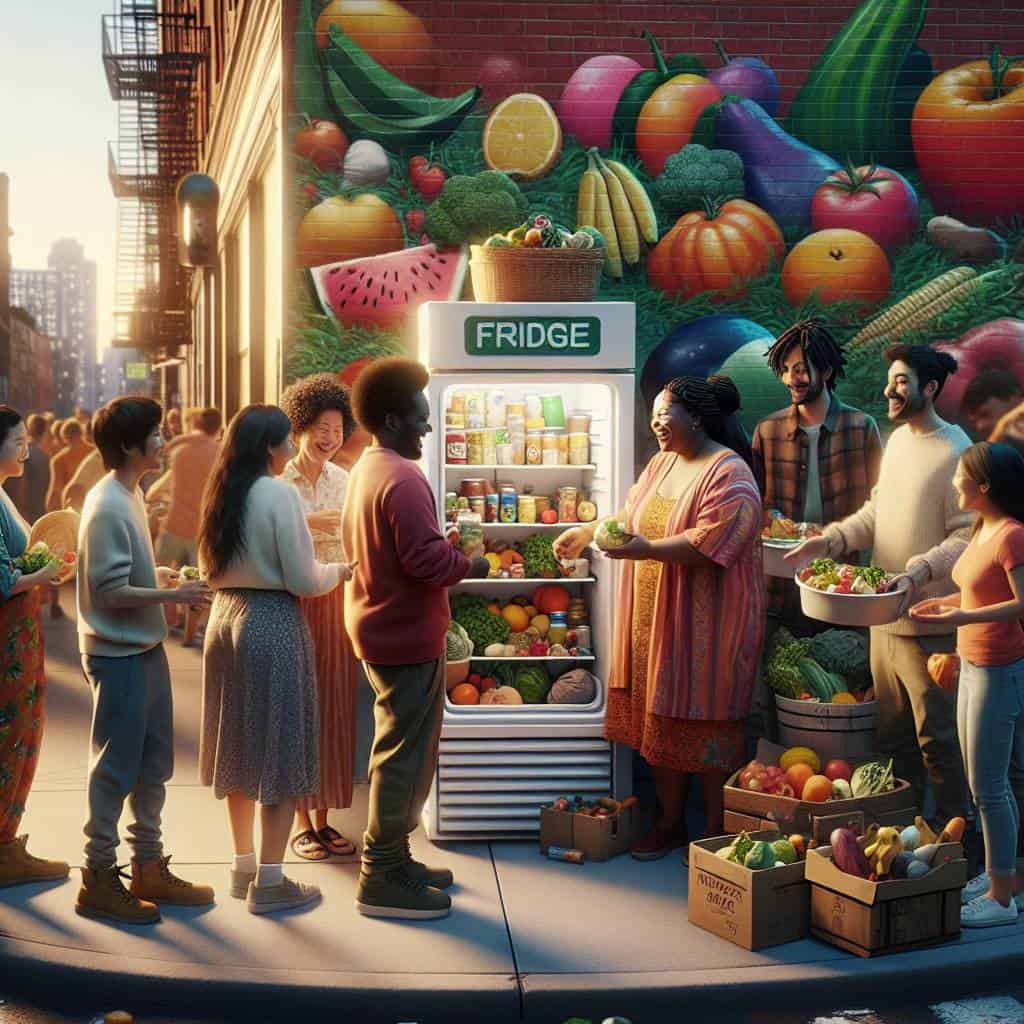
Picture this: a lonely fridge sitting on a bustling city street, like the unsung hero of a feel-good indie movie. It’s not just any fridge, mind you. It’s a community fridge, and it’s got more life lessons in its frostbitten compartments than a year’s worth of TED Talks. I stumbled upon this humble appliance on a rainy Thursday afternoon, looking like it had been plucked straight out of a sitcom where inanimate objects have more personality than the main characters. The fridge was filled with random food donations — everything from quinoa salads to mystery casseroles — and an unspoken promise that someone’s leftovers could be another’s feast.
Now, here’s where it gets interesting. This fridge wasn’t just about minimizing food waste or giving away your surplus spaghetti because, let’s face it, there’s only so much pasta one person can consume. It was about creating a ripple of connection across the concrete jungle. As I watched people approach the fridge — some with bags of groceries, others with hopeful glances and empty tote bags — I realized this wasn’t just about food. It was about community, folks. It was about people stepping up for each other, making sure that no one went to bed hungry. In a world where we’re all too often glued to our screens and living in our own bubbles, this fridge was a beacon of human kindness, a call to action to share what we have and take what we need.
So, the next time you see a community fridge, don’t just pass it by like it’s yesterday’s news. Stop. Open its door. Maybe add your own contribution to this quirky, street-side symphony of giving. Because, my friends, in a world where we’re all hustling to make ends meet, sometimes it’s the simple act of sharing a sandwich that reminds us we’re all in this together. And if that doesn’t make you want to high-five a stranger, well, I don’t know what will.
Refrigerated Epiphanies
In the heart of the city, community fridges remind us that sharing isn’t just caring—it’s the art of turning strangers into neighbors, one leftover at a time.
The Fridge That Started It All
It’s funny how a box meant for chilling leftovers became a catalyst for this whirlwind of communal enlightenment. I mean, who knew that my quest to rid my fridge of forgotten kale would lead to a revelation about human connection? Yet, there it was, a metal rectangle in the corner of the street, standing as a silent testament to the power of giving. This wasn’t some grand gesture or a movement led by influencers with perfectly filtered lives. It was raw, spontaneous, and maybe a little smelly at times.
But isn’t that what life in the city is all about? Finding beauty in the chaos and warmth in the unexpected? I never thought a fridge could stir my soul or make me ponder the intricacies of sustainability and shared humanity. But it did. And I’m grateful for it. So, here’s to the community fridge, the unsung hero of urban life, reminding us all that sometimes, the best way to connect is to simply share what we’ve got—even if it’s just a bruised banana.